Our relief teams continue their efforts to secure the basic needs of the forcibly displaced.

Our relief teams continue their efforts to secure the basic needs of those forcibly displaced from Afrin, Ras al-Ayn, and Tell Abyad, in the cities of Qamishli, Hasakah, Derik, and Amuda.
We extend our deepest gratitude to everyone who contributes to this effort. Your support makes these humanitarian efforts possible

A humanitarian appeal from the Kurdish Red Crescent

To the relevant authorities and the public:
We are writing to you with deep concern and regret to report the loss of contact with our colleague, Taher Rakan Taher, also known as “Anas Amsha,” since 2:00 PM on January 18, 2026. Our colleague was performing his noble humanitarian duty of saving lives while traveling from Raqqa to Hasakah, as part of relief and humanitarian efforts to assist those affected by the conflict.
We have received alarming reports indicating that civilian convoys and medical personnel are being targeted by armed groups in the area. Based on these reports, we are deeply concerned that our colleague, Taher Rakan Taher, may have been injured or captured by these groups.
Therefore, we urge anyone with information about our colleague, his whereabouts, or who is holding him, to contact us immediately and provide any information that could help locate and secure his release. Targeting medical and humanitarian personnel in conflict zones constitutes a war crime under international law and conventions, and represents a flagrant violation of human rights.
While we hold the Syrian government responsible for protecting medical and humanitarian personnel working in conflict zones, we also hold it fully responsible for the consequences of this incident and for the safety of our colleague, Taher Rakan Taher. We urge the government to take immediate action and all necessary measures to ensure his immediate release and safe return to his family.
In conclusion, we hope for your cooperation and prompt response to this appeal, and we look forward to receiving any information that may help in rescuing our colleague, Taher Rakan Taher, and enabling him to resume his noble humanitarian work.

Statement of condemnation and denunciation of attacks on health centers and medical personnel in northern and eastern Syria

Statement of Condemnation of Attacks on Health Centers and Medical Personnel in North and East Syria

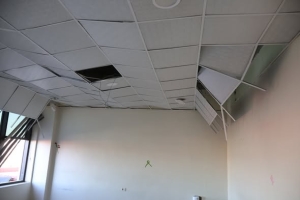
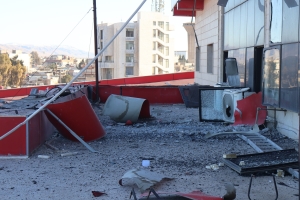
We at the Kurdish Red Crescent, based on our humanitarian duty, strongly condemn all attacks targeting health centers, medical personnel, and relief organizations in North and East Syria. The latest of these attacks occurred on the night of January 20, 2026, at 12:30 AM, when the Prosthetics Center in Qamishli was targeted. This center has long provided treatment to thousands of people with disabilities from all segments of society. The attack resulted in material damage.

According to the Internal Security Forces in Qamishli, the attack was carried out by a drone belonging to the Turkish state. We at the Kurdish Red Crescent hold the Turkish state fully responsible for these attacks, as targeting medical facilities, personnel, and humanitarian organizations constitutes a war crime under international law.

Therefore, we appeal to the international community and all human rights and humanitarian organizations to intervene immediately and urgently to stop these attacks on Kurdish cities and towns in North and East Syria, and to protect civilians and ensure their safety.

Distribution of humanitarian aid to displaced people

The Kurdish Red Crescent continues its humanitarian efforts by distributing food aid baskets to migrants from Ras al-Ain who are currently residing in shelter in Al-Hasakah.
The distribution covered 37 schools designated as shelters, benefiting more than 1,300 families. This initiative aims to alleviate the burdens on displaced families and support their essential needs during these difficult circumstances.
The Kurdish Red Crescent reaffirms its commitment to providing humanitarian assistance in line with its mission to serve those in need and to ease their suffering.

Providing emergency humanitarian assistance to Sweida

Since the beginning of the tragic events in As-Suwayda and southern Syria, we in the Kurdish Red Crescent have exerted our utmost efforts to reach those affected by the violence against civilians, especially in As-Suwayda Governorate. Given the severe tensions in the region, the sensitivity of the southern Syria file, and our concern for the safety of our local partners, cooperating organizations, and beneficiaries, we have committed during this period to working with the least possible visibility in order to protect everyone’s security.
Despite the gravity of the challenges, and thanks to joint efforts—foremost among them the efforts of local communities—we were able during this period to deliver emergency assistance as quickly as possible, which included:
• Supporting displaced families with food aid: 40,000 meals.
• Providing fuel to agricultural associations and farmers to continue their work, contributing to the strengthening of the local market in As-Suwayda city.
• Supplying fuel for several ambulances to ensure the transport of wounded civilians.
• Providing financial assistance to 280 displaced families from conflict areas.
• Helping secure communication and protection for a number of families with their children in various areas inside Syria, and offering them financial support until their return to their families in As-Suwayda Governorate.
In conclusion, we extend our deepest thanks to all partner humanitarian organizations and local partners who worked with dedication under the most difficult circumstances, and we reaffirm that our commitment to supporting our people in As-Suwayda, and across Syria, will continue without interruption.

Establishing sewage and water networks in Newroz camp

As part of its ongoing efforts to support displaced families and improve their living and health conditions, the Kurdish Red Crescent, in collaboration with Volkshilfe, carried out a series of service and health interventions at Newroz Camp under the framework of the Improved Living and Health project.
Newroz Camp recently received displaced families from Shahba, Afrin, and Aleppo. The interventions included the construction of bathrooms and sanitation facilities, as well as the establishment of sewage and water networks—contributing to the enhancement of public health, hygiene, and the protection of human dignity amid difficult living conditions.
In addition, the medical dispensary within the camp was expanded to increase its capacity and improve the quality of essential healthcare services provided to the residents.
Kitchen kits were also distributed to displaced families from Aleppo and Shahba residing in shelters in the cities of Qamishlo, Derik, Hasakah, Raqqa, and Tabqa. Furthermore, water tanks were secured to ensure access to clean water as a fundamental part of an integrated humanitarian response.

Journey to Recovery

Ibtisam Muhyeddin Youssef, a 25-year-old woman, faced a major challenge after having her right leg amputated due to cancer. She spent seven months enduring pain and difficulty.
Her journey toward healing and reclaiming a normal life reflects strength, resilience, and determination. After visiting the prosthetics center run by the Kurdish Red Crescent, Ibtisam received a prosthetic leg, along with physical therapy and psychological support. This integrated care helped her navigate through some of the most difficult and painful months of her life.
Today, Ibtisam walks with confidence toward a new life — one where her prosthetic leg stands as a symbol of her struggle and victory over illness.

Innovative and tailored initiatives to support patients with the aim of integrating them into society


As a new step added to the set of activities and services provided within the Oncology, Burns, and Thalassemia Hospital, work is currently underway on a set of innovative initiatives specifically designed to support young and adolescent patients. These initiatives aim to integrate them into society through empowerment and learning new skills, including nursing courses, English language courses, psychological support activities, and more, while they are undergoing treatment inside the hospital.

Providing solar-powered panels for the IDPs


A series of living challenges face the IDPs from Afrin and Shahba in shelters, including the absence of electricity in the majority of the centers, which constitutes daily suffering for them. Through an emergency plan, 1700 small solar panels were distributed in Qamishlo, Hasakah, Tirbespiye, Amuda, and Jal Agha. This initiative, despite its simplicity compared to the scale of needs, enables families to benefit from it, even partially, in providing night lighting or charging some small devices.